








































































Most teams treat native versus cross-platform as a technical decision. It isn't. The choice shapes what users actually see, tap and feel. That makes it a UX decision dressed in engineering clothes.
What each approach actually means
Native. Built separately for each platform using the platform's own tools. Swift or SwiftUI for iOS, Kotlin or Jetpack Compose for Android. Two codebases, two release cycles, two teams.
Cross-platform. One codebase, both platforms. Flutter, React Native and Kotlin Multiplatform lead the field in 2026. You write the app once and ship it to iOS and Android together.
Hybrid. Web technologies wrapped in a native shell. Ionic and Capacitor are the obvious examples. For most use cases a well-built progressive web app is a cleaner choice.
Where native still wins
Platform conventions
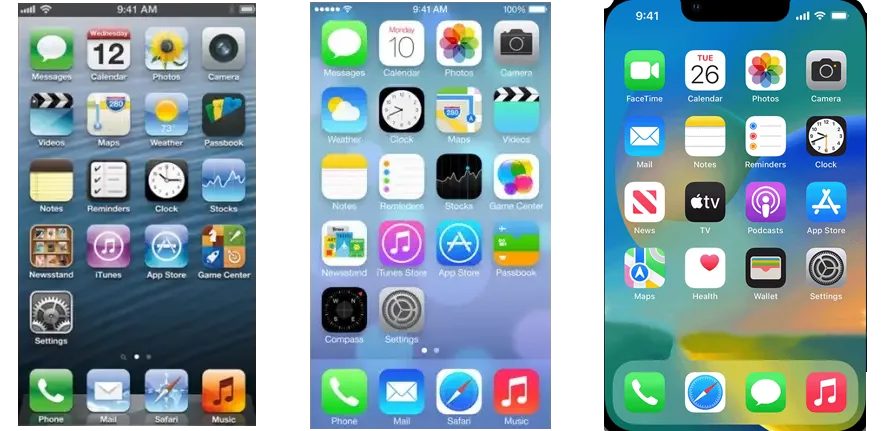
iOS and Android speak different visual languages. iOS uses bottom tabs, collapsing nav titles, and a specific gesture vocabulary. Android leans on Material Design, with floating action buttons and its own motion patterns. Users on each platform recognise these conventions without thinking. Breaking them costs you trust before the first tap.
Native apps get this for free. Cross-platform builds face a choice: pick one platform's conventions and feel foreign on the other, or invent a custom language that feels native to neither. Flutter often takes the second route. For some products that works. For others it lands as a tell that corners were cut.
Performance in complex interfaces
Native still has the edge on heavy animation, real-time data, video processing, and anything GPU-intensive. The gap has closed, but it isn't gone. Apps built around complex gestures, camera work, AR or sensor-heavy interactions earn their keep on native.
Accessibility
Platform components ship with accessibility built in. Screen readers, dynamic type, reduced motion, high contrast: all work by default. Cross-platform frameworks have improved a lot, but reaching parity still takes deliberate work.

Where cross-platform wins
Consistency
When the brand matters more than the platform, cross-platform gives you tighter control. The same interface on both devices, no divergence. Consumer apps with a strong identity gain something real from this.
Single release cycle
One codebase ships to both stores at once. Bug fixes and improvements reach every user on the same day. Native teams manage two releases, which often means two slightly different experiences.
Shared design system
Components map one-to-one with code. You design it once and it gets built once. The product that ships matches the design that was approved.
The 2026 state of play
The gap between native and cross-platform UX has narrowed sharply. Flutter's rendering is smooth and consistent. React Native's new architecture (Fabric) closed most of the performance gap. Kotlin Multiplatform lets teams share business logic while keeping native UI on each platform.
For business apps, content apps, e-commerce and most utilities, cross-platform now ships experiences users can't tell apart from native. The honest answer in 2026 is that the technology choice rarely shows up in the finished UX.
Where it still does: apps that lean hard on platform-specific hardware or APIs. Health and fitness with deep sensor work. Camera-first apps. Real-time collaboration. AR. If your product lives in that space, native still earns its budget.
A decision framework
Choose native when
- The app leans heavily on platform-specific hardware or APIs
- The budget supports two teams or sustained dual development
- The app is the product, not a companion to a web service
- Platform-native UX patterns are central to user expectations
Choose cross-platform when
- You need both platforms within a constrained budget
- Speed to market matters more than platform purity
- A consistent brand experience matters more than native conventions
- The app is about content and interaction, not hardware integration
Consider a progressive web app when
- The app mainly delivers content or a utility
- You'd rather not deal with app stores
- Budget is tight and reach matters more than gloss
- The capabilities you need are already in the browser (which, in 2026, is most of them)
The questions that matter more than the stack
None of the above decides whether the app succeeds. These do:
- Does onboarding get the user to value within the first minute?
- Is the primary action, the reason the user opened the app, reachable in two taps or fewer?
- Does the app respect the user's time, attention and data?
- Does it work for users with disabilities?
- Does it hold up on a slow connection and a four-year-old phone?
A native app that fails these questions is worse than a cross-platform app that passes them. The platform is the canvas. The work is the painting.
Where to start
App planning starts with UX, not the stack. Get the experience right and the technology choice almost makes itself. That's how I approach app projects, with UX design doing the thinking underneath.